Back to Insights
 8 MIN READ
Next.js vs. a native app: what should you build first?
When a web app is the right first version, and when the product only works if it lives on the phone.
Decide the job first
“Should we build an app?” is usually the wrong first question. The right one is where the job happens. If people find you by searching, share a link, or finish the task in a browser between other tabs, a Next.js product is the first version. If the job happens in a van, a kitchen, or a clinic with a bad signal, the phone is the product.
We have watched teams spend a quarter on a store listing before they knew whether anyone wanted the workflow. The store is a distribution channel. It is not a strategy. Write the job, the place it happens, and the thing that is impossible in a browser. Then choose.

If the first users will find you through search or a link, ship the web first. Earn the native app with a job the browser cannot do.
When the web is the first product
A Next.js app gives you one codebase, a URL you can send today, and a page Google can index. For a marketplace, a dashboard, a booking flow, or a tool your buyer evaluates before they talk to sales, that is the whole advantage. You can put it in front of a customer this week and change the copy tomorrow.
- The job starts from search, email, or a shared link.
- The buyer needs to try it before they install anything.
- You will change the flow every week for the first months.
- Offline use, push, and the camera are nice, not required.
Install prompts, a home-screen icon, and a careful responsive layout cover a surprising amount of “we need an app” without a second team. We only leave that path when the browser is genuinely in the way.
When it has to live on the phone
Native earns its cost when the device is the workplace. Offline capture, a reliable camera, background location, push that has to arrive, or a flow that must keep working when the warehouse wifi drops. A tab the user might close is not a product in those rooms.
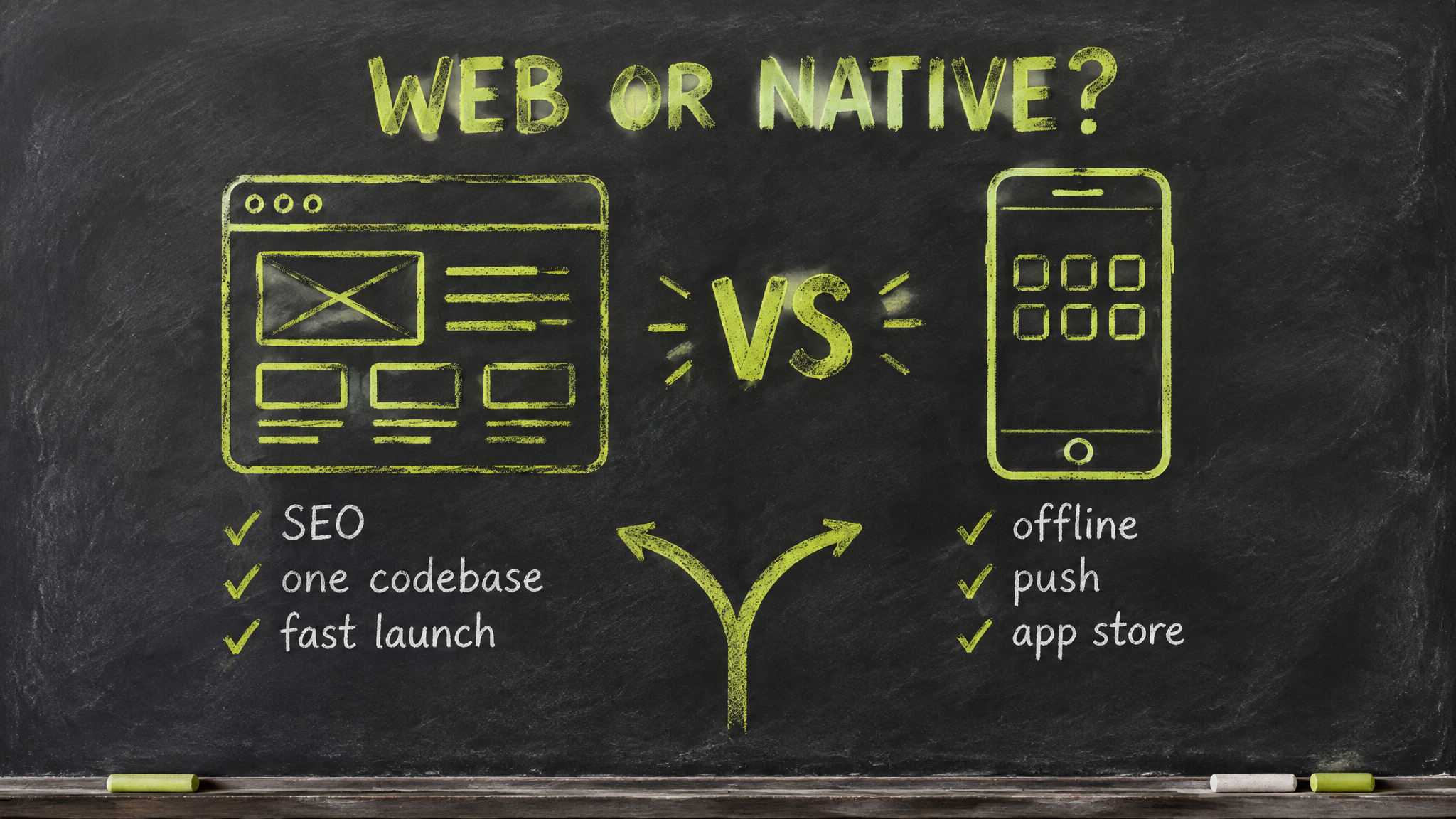
The chalkboard we use in the workshop is blunt. Web: search, one codebase, a fast launch. Native: offline, push, the store. If the right-hand column is the job, we build the app and treat the marketing site as a separate, smaller piece of work. If the left-hand column is the job, we do not apologise for staying on the web.
The call we make in the room
We do not split the difference with “we’ll do both.” Two clients, two review processes, and two places for a bug to hide will sink a first release. The decision is written down: first surface, the job it must complete, and the date we will reconsider the other one. Reconsider means a new brief, not a guilt feature.
“Build the surface where the job already happens. The other one can wait until that job is real.”M Jhanzaib, CEO
Get the next build note
in your inbox.
One practical email a month. No fluff, unsubscribe anytime.
Keep reading
All insights