Back to Insights
 5 MIN READ
The MVP scope checklist we use on every project
The questions we ask before a first version is allowed to grow past what a team can ship.
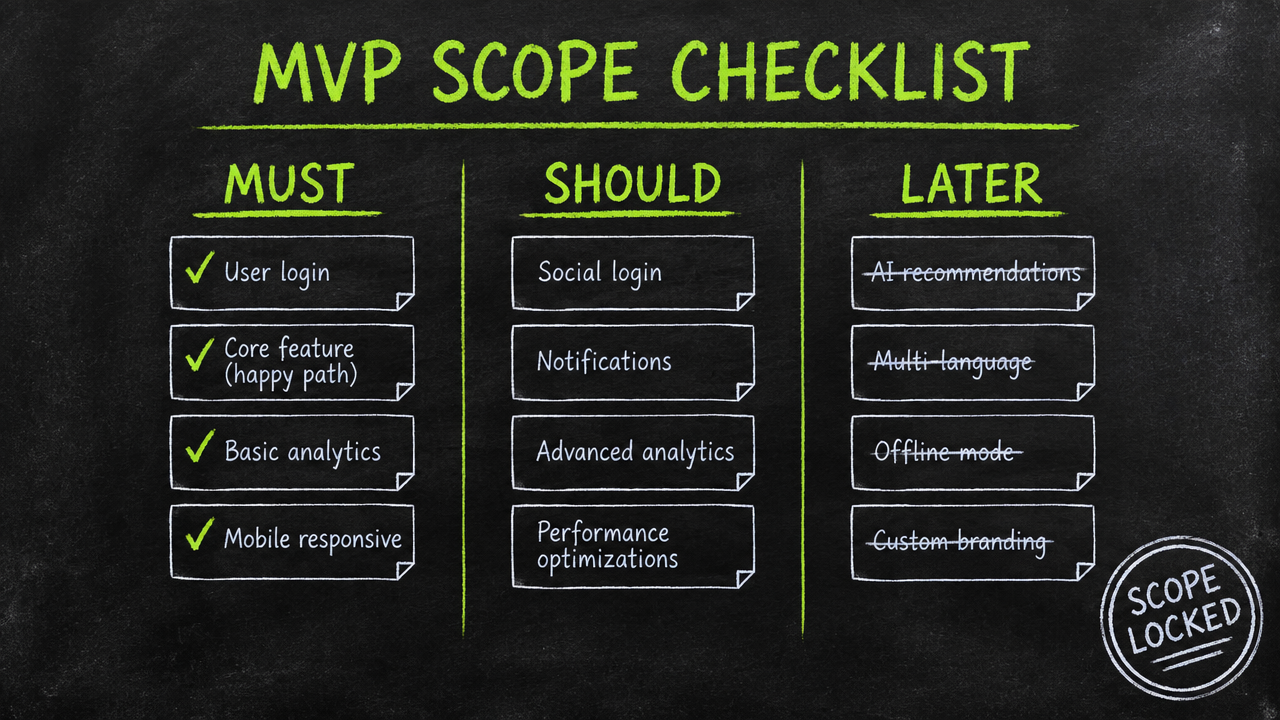
Must, should, later
Every project we take starts on the same three columns. Must is the release. If it is missing, we do not call it shipped. Should is the work we will do if Must is calm. Later is a real list, not a bin: ideas we have agreed not to build yet, with a reason.
The point of the checklist is the lock. Once Must is written, adding to it means taking something else out. That sentence is harder to say in a meeting than it looks. It is also the only reason a first version still fits the team that has to build it.

A feature with no named user and no failure case does not go in Must. It goes in Later, in writing.
The questions that cut a feature
We ask the same questions of every line, including the ones a founder loves. Who uses this on the day we launch? What do they do if it breaks? What do we learn if we leave it out for a month? If the answers are “everyone,” “we’ll see,” and “nothing,” the line is not Must.
- Name the person, not the persona.
- Write the failure: what the user does when this is down.
- Say what we will not support in version one.
- Put a date on Later, or admit it has no date.
What we lock before design
Design gets expensive when the columns are still moving. We do not open a high-fidelity file until Must fits on one page and the client has said, out loud, what is Later. The page is the contract. Screens that invent a fourth column are sent back.
This is also how we protect the team. A designer cannot make a calm product out of an anxious brief. Scope locked means the first screens can be about the job, not about hedging every future request in the navigation.
How the list is used
The checklist lives in the kickoff, then again at the end of discovery, then again the moment someone says “while we’re here.” We read Must back in the client’s words. If they flinch, we edit the list before we edit the plan. Surprises in week six are usually items that were never forced into a column.
“Later is not a rejection. It is how Must stays small enough to ship.”Victoria Hayes, Project Manager
Get the next build note
in your inbox.
One practical email a month. No fluff, unsubscribe anytime.
Keep reading
All insights